Chipá or the thread of memory
FACUNDO OLABARRIETA
There is a thread, a line that is built out of repetition, of a dish being made over and over again, always varying and always the same. That is the line of memory, and food is a vessel for it.
I want to tell you about “chipa”, a traditional paraguayan dish, made with cheese, pig fat, eggs, annise and tapioca starch. It may come in many forms, but the most common are a circular one, resembling a very big doughnut, or just shaped in little ping pong sized balls.
Telling you about chipas means telling you about my childhood summers in Paraguay, visiting my grandparents. They emigrated to Argentina running away from Strossner's dictatorship in their country, and ended up raising their entire family here, in Buenos Aires. Then, after democracy came back in Paraguay, they returned and stayed there the rest of their lives.
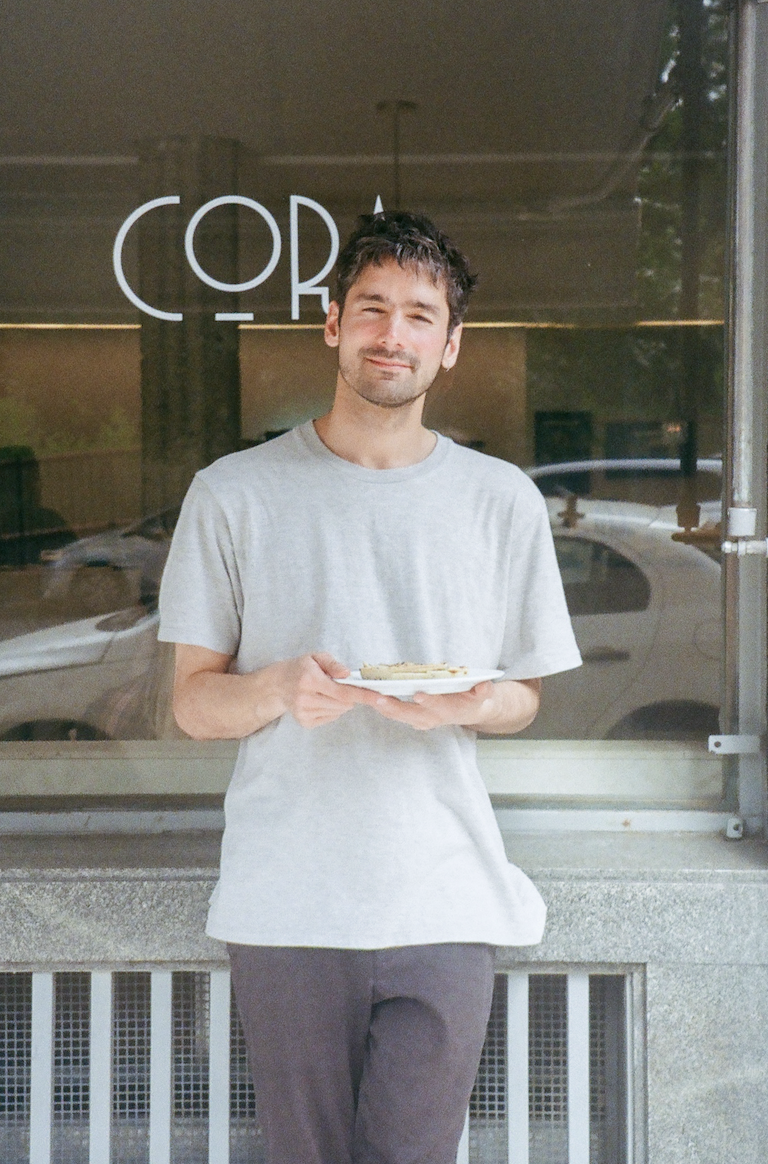
Image courtesy of Victoria Fornieles
We used to visit them every summer.
I have the vivid memory of being in a big white car, recklessly commanded by my increasingly blind grandfather, going fast across hot Paraguayan countryside. Destination: Piribebuy, a small village where my grandparents have a big and beautiful house that´s even older than them. A house with a garden, full of trees, with fruits such as passionfruits, mangoes, grapes, lemons, and guayavas growing on it, a round and out of service little round well made of grey bricks, and a big swimming pool next to the “quincho” where we would make asados on the weekends.
But before getting there, there is an inevitable and very much desired stop. There is this spot, just by the side of the road, where a guaraní community is set. They have a couple of big rustic ovens (barro) where they take out hot, just baked “chipas”. Chipas are a traditional paraguayan dish, and they are the comfort food of my life. They come shaped in many forms. The ones that we use to buy by the side of the road were big and circular, like giant donuts. They were lent to us straight out of the oven, so hot we would drool over them for some kilometers before daring to even try to eat them. The smell of hot cheese would fill the car as we drove around increasingly wilder and greener surroundings. Finally, we would take one of them and break it with our hand, a piece for everyone in the car. The texture is like nothing else I know, cheesy but almost gelatinized, and the exterior, full of cracks, has a dry crunch that pairs so well with the soft interior.
This scene became a repeated welcoming ritual to my childhood vacations in Paraguay, the beginning of weeks of sun, siestas, countless hours in the pool with my cousins and sister, or walking around the garden picking fruits - incredible fruits packed with flavour and freshness - and of many, many more chipas along the way.
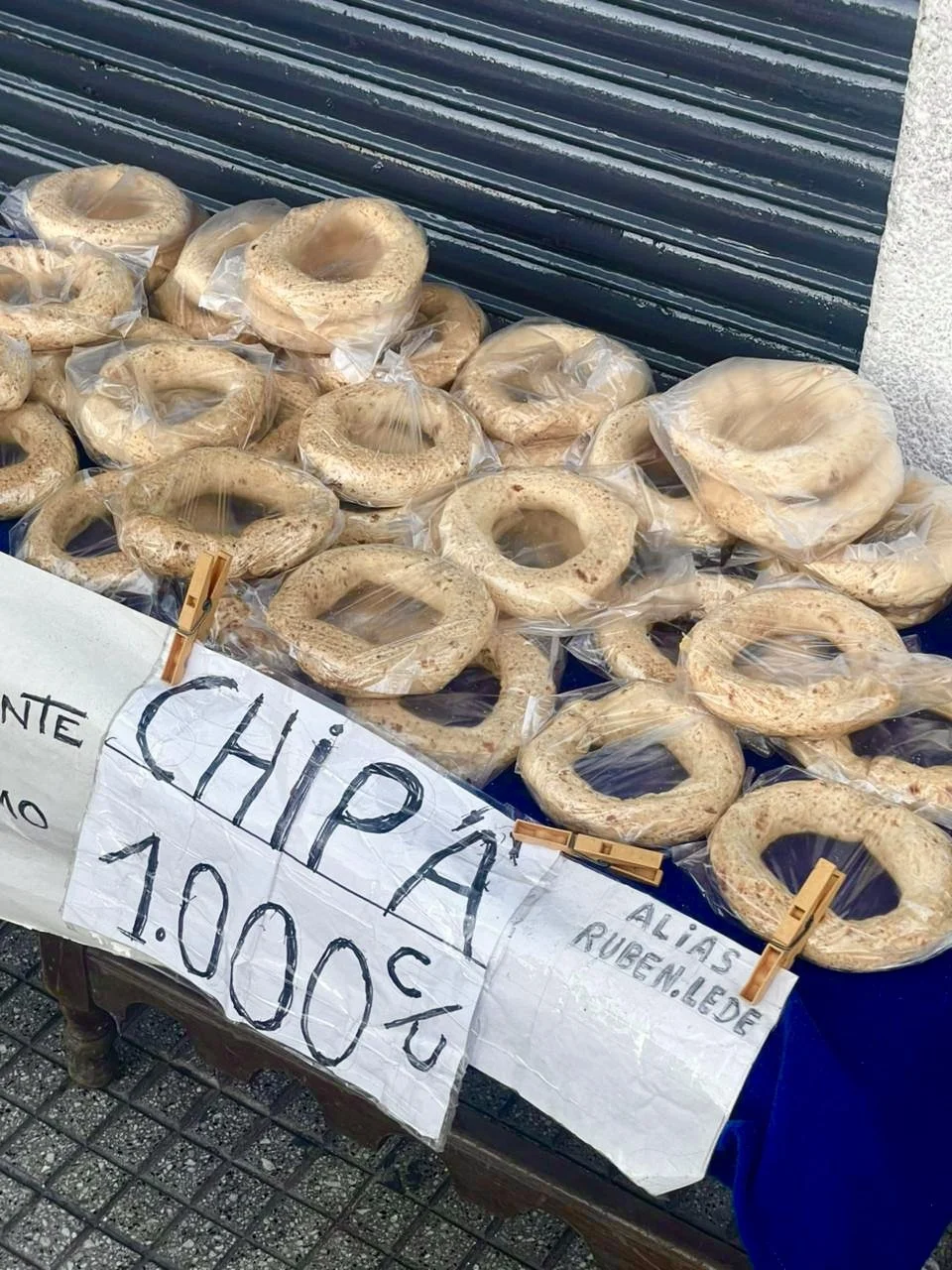
This chipá was photographed by Facundo Olabarrieta for us
Back in Buenos Aires, my mother used to cook chipas from time to time, usually to share with friends over a cup of coffee, or as a weekend treat to start a lazy sunday breakfast. I ate them countless times, many scenes overlapped over each other that only leave me with a common feeling of sharing, of togetherness, of home.
With time, I ended up learning how to make them myself, and also cooked them for my friends and family.
Over the years, chipás started to gain popularity within Buenos Aires's food scene. They are common now in bakeries, pastry shops and even as a starter in some restaurants, stuffed with other ingredients such as ham or blue cheese.
And now, as a pastry chef, living in a little village on the outskirts of Buenos Aires, I make them in a quantity I would never imagine before, and bake them every morning. As I rush around racks full of pastries, taking things in and out of the oven, filling the counter with sweet treats and finishing frostings and fillings for cakes and pies, I also replete a enormous green ceramic bowl with big rounded chipas just taken out of the oven, yellow and almost gleaming, and put one aside, my everyday morning snack, a little part of the past entangled with the present in every bite.
