elihay Berliner
To begin with a flavor: sardines fresh from the sea, laid over a net on an open fire — no charcoal, only living flame — head and tail intact. Their own juices were the sauce.
Ajoblanco: garlic and almonds. The entire Mediterranean in a single dish.
Because of where we are on the planet, we had to mix in the direction of the Earth’s rotation.
We are always chasing the flavors of childhood.
Peeling an orange: perhaps the most universal gesture of love.
And herring, fermented, intense… one of the most moving flavors of all.
We create new memories. In the restaurant we do not teach recipes. We teach a language. A single bite can change your life.
This account, a journey through flavors and memories, belongs to Elihay, cook and creator of culinary experiences.
Born in Paris and raised between Israel and France, Elihay Berliner left school at fourteen to devote himself entirely to cooking. By sixteen, he was already a head chef: an early start that set the tone for the intensity of his path. His training bears a distinctly French imprint, yet his practice moves freely across worlds, places, and memories.
After collaborating on various European projects, he became one of the founders of C.O.P. in Vienna, a restaurant conceived as a culinary gallery, where products and the people behind them take center stage. Today, his work continues in dialogue with producers and cooks, exploring what endures beyond fashion: flavor as memory, and as a human gesture. (C.O.P. will reopen soon after a change of location).
This interview was conducted by Aglaia Dementeva this summer at Café Ritter in Vienna.
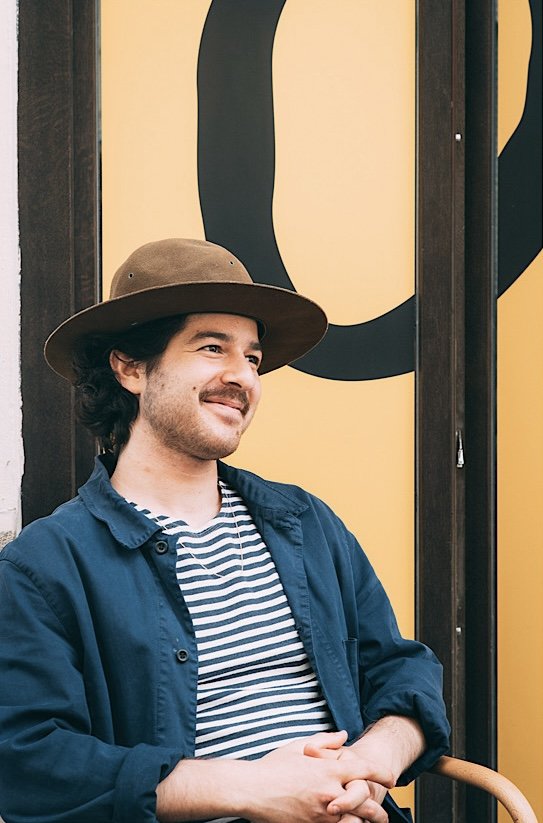
Image courtesy of Nuriel Molcho
A: Do you remember the first taste that moved you? Why? What did it make you feel beyond flavor?
E: Sure. I think my earliest food memory reflects the political situation in Israel and a bit of my childhood. In the 90s — still today — fishermen around the Gaza Strip weren’t allowed to go out to sea without a supervisor, which was basically a Jewish person on board. It was a very racist regulation. They said someone had to join them “for security reasons”, and only Jewish people were allowed to be those supervisors.
My dad heard about it and realized that people were losing their livelihood, so he decided to go and be that supervisor. He lived in a bus for a year — parked the bus by the sea — and went out with the fishermen every day. He became a fisherman for a year.
I lived with my mom, but I would go visit him every few weeks. So when I came, he would always take the second round, around five or six in the morning. The fishermen coming back from the first round would knock on the bus window to wake me up. I would come out, and they would have these sardines.
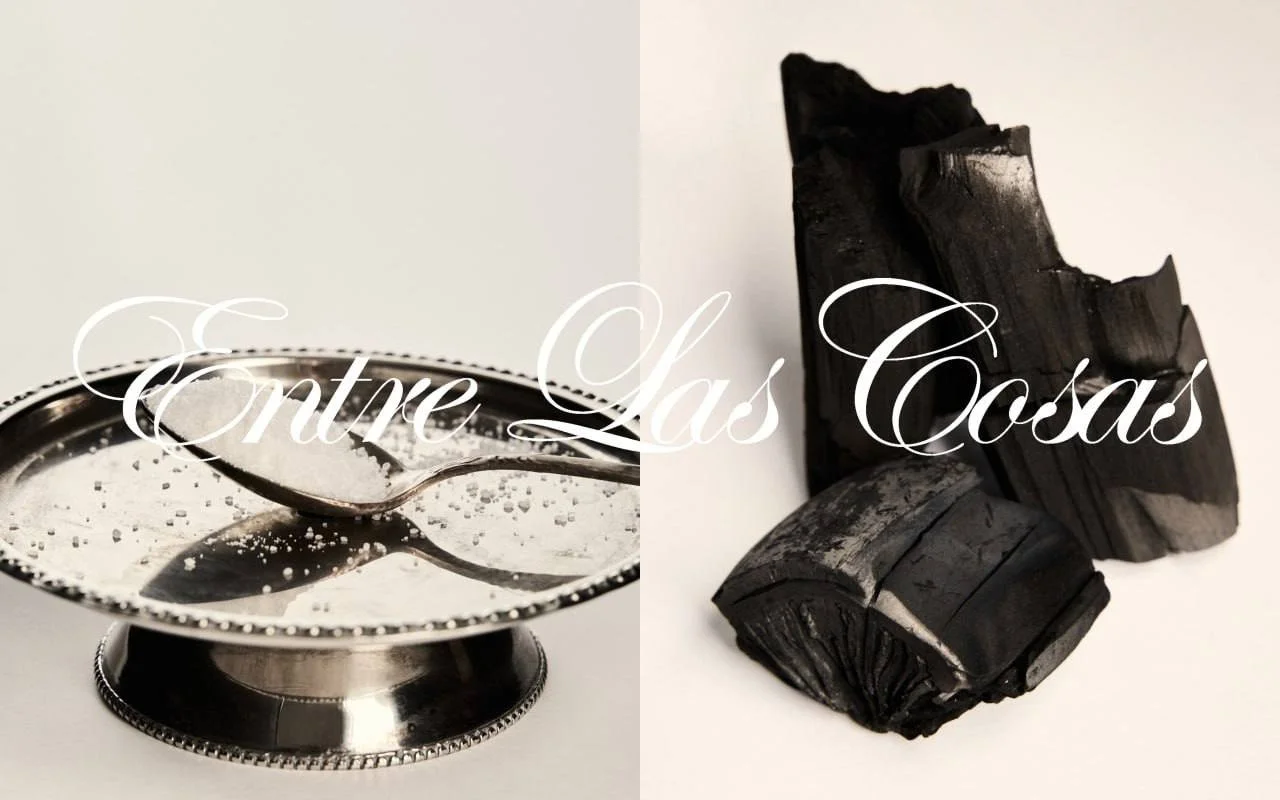
They wouldn’t clean them. They just put them straight on a net over an open fire - not even charcoal, just open flame —, made coffee or tea, and threw pita bread directly onto the coals just to char it a bit. So we’d have this burnt pita and sardines with the head and tail, everything. The fat from the sardines was enough to be the sauce, to be everything. It was juicy, it was nice, it was crunchy, it was delicious. Still one of my favorite foods.
A: Did you have some similar dish in your restaurant?
E: Yes. I dropped the bread for this one, but we made sardines on charcoal with some Atlantic sea salt, a splash of olive oil, and actually added ajo blanco, which is garlic and almonds, a kind of alioli. It felt like everything Mediterranean: sardines, olive oil, almonds, garlic… like the most Mediterranean dish on the planet.
A: Do you have any personal rituals in the kitchen that no one sees, but that are part of your daily practice?
E: I'm sure I do. There are things that stuck with me from Eyal Shani, who used to be my mentor. I grew up in his kitchen, and he had some things… not exactly superstitions, but habits that came from working with him.
For example, we always mixed to the right. His explanation wasn’t mystical: he said that because of where we are on the globe, we should mix in the direction of the earth’s rotation. If you were cooking in Japan, maybe it would be the other way around. I'm not sure. But to this day, it’s a habit — I always mix to the right.
A: In your project C.O.P., the menu changes often, as if each day were a unique archival piece. What do you think is essential to preserve, and what do you feel can be let go?
E: I think everything can be let go. Actually, everything must go.
Sure, you can create classics. But once they become classics, they have to go. Because those anchors... they weigh you down. So if you hold on to something that’s past its prime - you’re not only losing quality, you’re doing something worse. My menu is tiny, fewer than 25–30 dishes. So if you keep something just because people like it, or because you’re famous for it, that’s taking up space from something fresher, more relevant, better.
We especially kick things off the menu when they become "classics". Because at that point, they’ve already experienced it. We’re not in the business of recycling emotions. We’re in the business of giving you new ones.
A: How is emotion archived in your work? Does anything remain, or does it all evaporate after service?
E: If I believed the feeling disappeared right after — I’m not sure I could do what I do.
I like to believe that what we offer can stay with you. Just like that moment with the sardines by the sea stayed with me. I really believe that a bite of food can change your life. A strong emotion that you haven’t felt before can shake the core of your existence.
A: Your work has a strong visual dimension. What do you think about the relationship between cooking, form, and color?
E: I would say it all boils down to beauty — to what makes you feel. I’m just naturally drawn to things that are beautiful. So there’s a natural motivation to work with products that are beautiful, and to plate them in a way that represents what they mean to you.
A: We’re now at Café Ritter, and the atmosphere is so different. Your restaurant has a totally different vibe. In a way, that’s always a decision, right? What do you think matters in that?
E: We’re trying to provoke emotions. That's what it’s about.
By any means necessary, we try to provoke emotion in you. Through any sense that allows it: the service — making you feel seen, even just for a moment — cared for, even loved. Through sight: something that moves you when you look at it. Through smell, through taste. We want you to experience something on every level.
And it starts with things like the plate: who made it, what it’s made of, what makes sense in terms of temperature, what makes sense aesthetically. But really, it’s all part of a search for beauty.
Which—- isn’t that what life is about? Just looking for beauty. Visual, taste, memory.
A: Have you ever cooked as a way of saying sorry or expressing something you couldn’t put into words?
E: Yes.
A: Can you say something more?
E: Next question. (laughs)
A: If your cooking could leave just one thing in the person who tastes it - even if they don’t recall the details - what would you like that to be?
E: That the person feels loved. Cared for. Seen. That’s all it’s about. We’re born searching for that feeling—- to be seen— and we die. That’s basically what happens in between. And to really see something, you have to look. And real looking means love. The emotion I work with the most is nostalgia. It’s the most powerful tool we have as cooks.
You see people cry while eating, and it’s almost always because it connects them to a memory. Especially desserts. We’re always chasing childhood desserts. The funny thing is, we create things that taste like your childhood… even if you never had that exact flavor before. We have a dessert with guava. You might have never had guava. Maybe you grew up somewhere with no berries, but the combination throws you back anyway. It’s about the feeling.
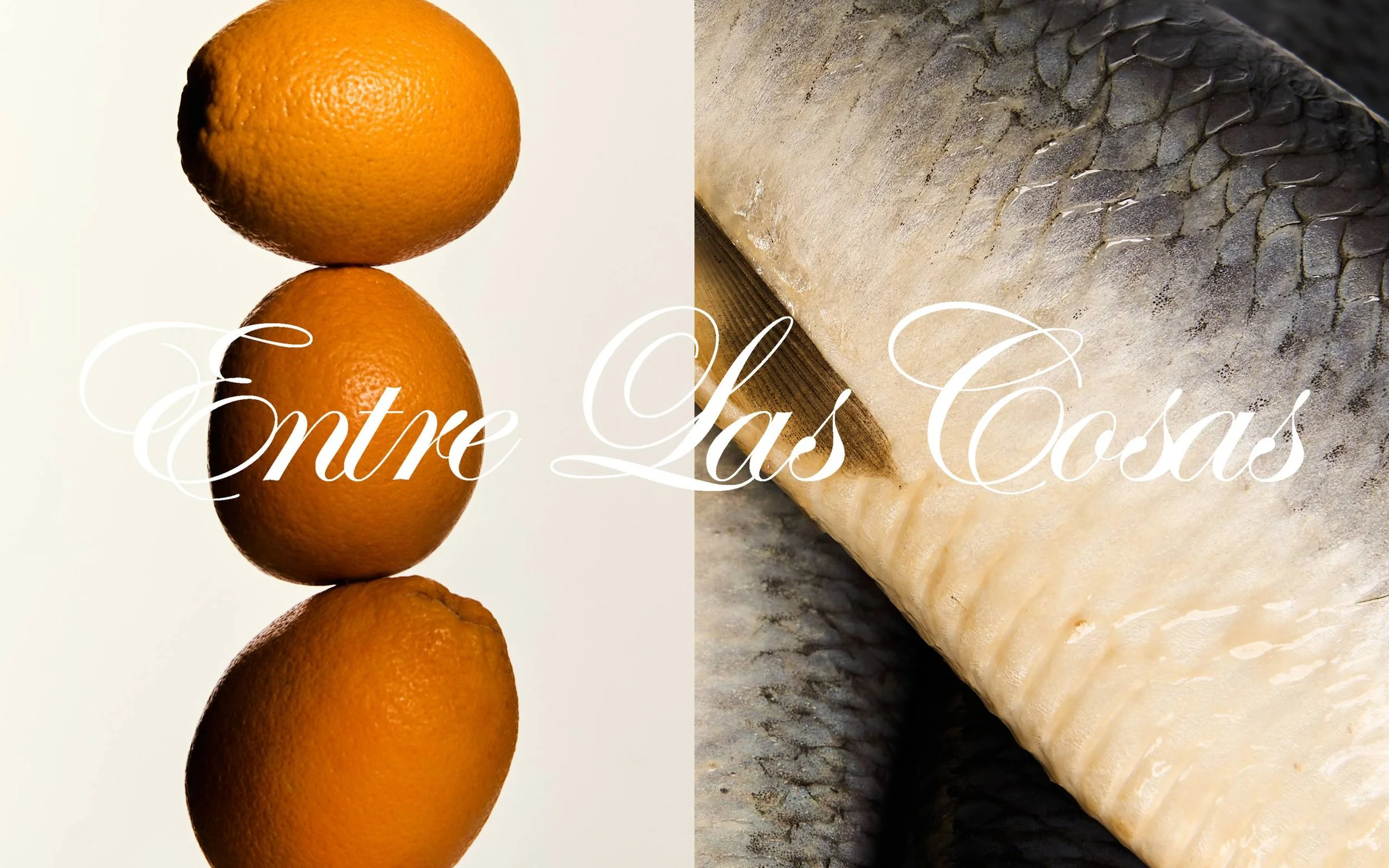
I had this thought that peeling an orange is probably the most universal sign of love.
When you love someone, you peel an orange for them. You share half with them. You do it for a lover, a child, a grandparent, a friend. It’s such a spontaneous gesture.
In the installation I am planning, there will be a mountain of oranges —three tons of them. One person enters. Another peels an orange and hands it over. You don’t have to give someone an emotion. You only have to provoke it.
A: Do you believe there are flavors that are impossible to translate? How do you work with what can’t be put into words?
E: You can’t reach everyone. One in a thousand — if you’re lucky — maybe one in a million, will really be moved. But still, the food has to be genuine, well-sourced, well-cooked, well-presented. But the ultimate goal is to change someone’s life.
And sure, we won’t change everyone’s life. But maybe someone who’s never tried herring before - it won’t be nostalgic to them like it is for me - but they’ll taste it… and maybe they’ll feel something.
Herring is a great example. Lots of people say, “I hate herring”. And at the restaurant we say, “Order it - and if you don’t like it, it’s on me. I’ll pay for it.”
No one ever took the offer. Maybe they were just being polite, but still - people started ordering it. And herring - fermented fish — is one of the most soul-shaking flavors. It’s unforgettable. So yes, we are building memories. It’s a long-term investment. We’re not trying to cash in on emotions now — we’re planting something in you. We’re giving you a gift. Something small that stays.
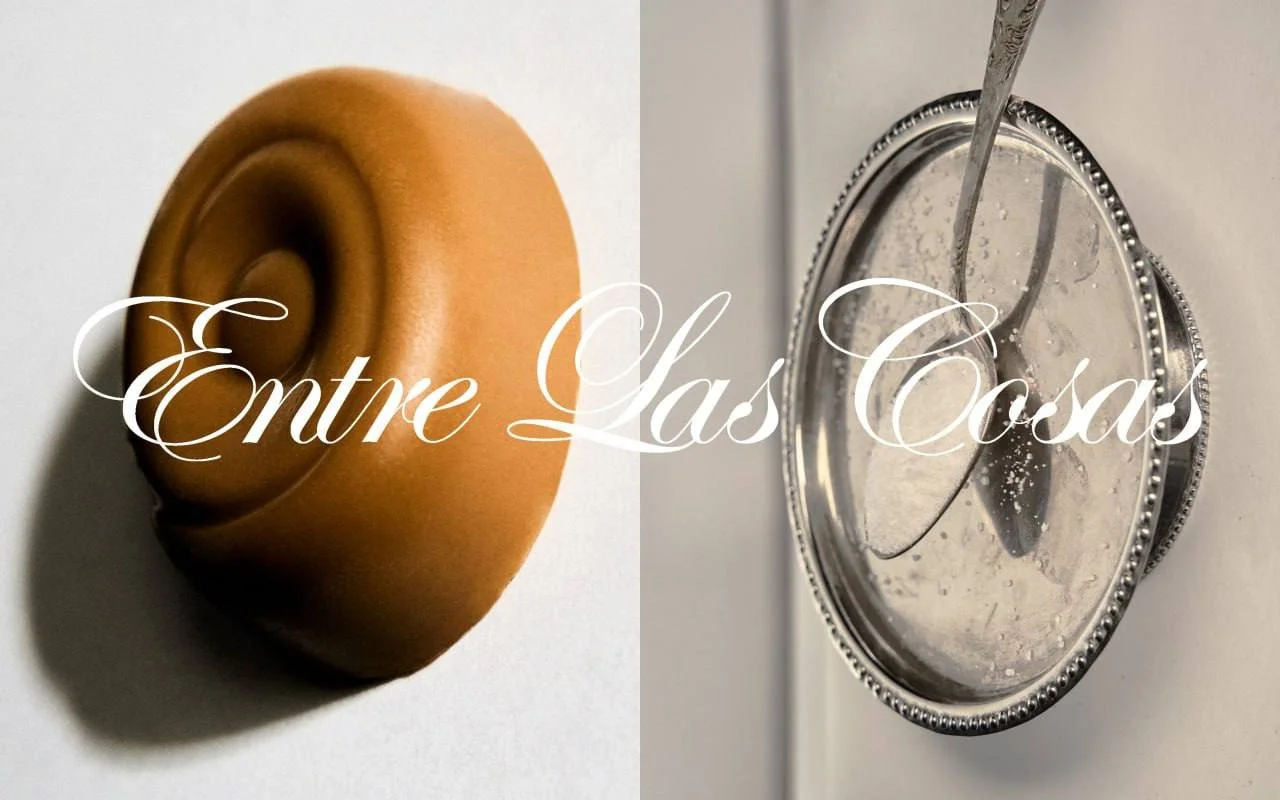
Another example: Werther’s Originals — do you know them? That butterscotch hard candy. I grew up eating those. And I wanted to make a dessert that tastes like that.
I tried for two weeks. I almost gave up and started melting actual candies into the mix - and then thought, “This is stupid.” But then I nailed it. We burned it at the table — with a big piece of metal — so the whole room would fill with the smell of burnt caramel. Everyone would smell it and want to order it. Sometimes the fire alarms would go off from the smoke. But it became a thing. A memory.
A: Your cooking brings together multiple territories: Israel, France, Austria. How do you navigate those cultural layers in your way of cooking?
E: It’s all tools — all part of our vocabulary.
And I think a real cook, a good cook — and that’s what we try to be — is someone who creates a personal language of cooking. You take all those words, all those influences, and you create your own language. And everything you cook comes from that language. So the more you’ve lived, the more tools you have, the richer your vocabulary, the better cook you are. Because the better you can express yourself.
At the restaurant, we try not to teach recipes. We teach the language. We actually call it that. What we do. What we don’t do.
For example, we don’t use garnishes. That’s part of the language. We don’t decorate. We’re not afraid of burning things — burning is good. It’s part of our flavor profile. We’re not afraid of bitterness, of spice, of bold flavors. So yes, it’s all part of this language.
A: Do you think that flavors can lie in some way?
E: Of course. Food can be phony, like anything else.It’s a human creation.
It can lack substance, it can lack a coherent voice. It can try to be something it’s not.
A: If you could cook for one person — anyone — who would it be?
E: Oh... it can’t be just one! Can I say a few?
A: Just one.
E: Well… I would much rather have the ability to put a few people at the table. But It would be Eyal Shani, the chef who got me into cooking. We’re not in contact anymore.
